

A Designer’s Guide to Renovating Your Orange County Mid-Century Home
There’s something truly magical about a mid-century home—flat rooflines, long horizontal planes, and floor-to-ceiling glass that lets the sunshine pour in. These architectural gems deserve thoughtful renovation—ideally with the expertise of an experienced Orange County interior designer who respects the nuances of the mid-century interior design style. Whether you're opening up the layout, upgrading finishes, or refining the decor of your mid-century Orange County home, here are a few expert tips to help you bring your space into its next beautiful chapter.
There’s something truly magical about a mid-century home—flat rooflines, long horizontal planes, and floor-to-ceiling glass that lets the sunshine pour in. This iconic design aesthetic is characterized by sleek lines, open spaces, and a blend of indoor and outdoor living. In Orange County, where the climate invites year-round al fresco living, this architecture feels especially well-suited—blurring the line between structure and landscape.
If you’re lucky enough to own one of these architectural gems, you already know: they deserve thoughtful renovation—ideally with the expertise of an experienced Orange County interior designer who respects the nuances of the mid-century interior design style. Done well, a mid-century renovation blends reverence for original details with modern livability, creating something that feels at once timeless and tailored. Whether you're opening up the layout, upgrading finishes, or refining the decor, here are a few expert tips to help you bring your space into its next beautiful chapter.
Embrace the Open Layout—But Define It with Intention
One of the hallmarks of mid-century architecture is the open floor plan—a forward-thinking idea that emphasized flow, light, and connection long before it became a buzzword. But not all homes from the era fully embraced it, and many have since been chopped up by misguided renovations. If your space feels disjointed, consider thoughtfully removing non-load-bearing walls to restore that sense of movement and openness.
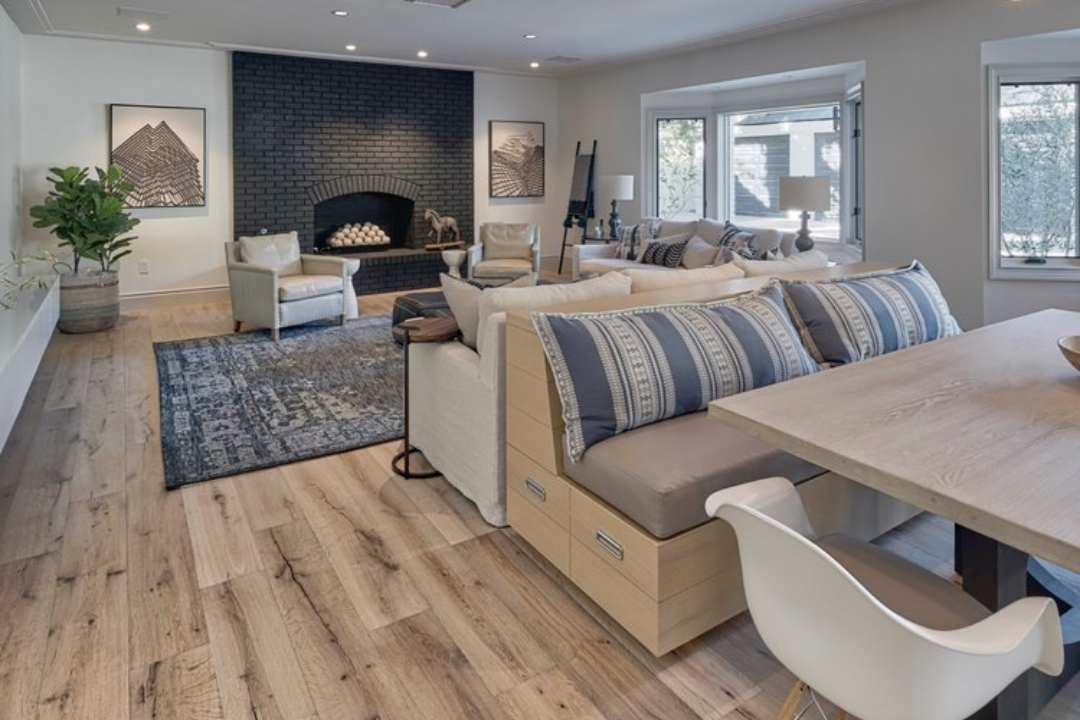
That said, open doesn’t mean empty. A well-designed layout uses both architecture and furnishings to subtly define zones. Wide transitions—especially those framed by cabinetry, shelving that wraps around a corner, or low partitions—allow your eye to travel freely from space to space while still giving each area its own identity.
Design Insight:
Our minds are surprisingly generous. Even when something like a table lamp or shelving unit partially “blocks” the view, your brain fills in the rest—especially across wide openings. Instead of fixating on keeping everything in your line of sight, focus on functionality and layering to create cozy vignettes. A strategically placed rug or reading chair won't break the flow; it'll enhance it.
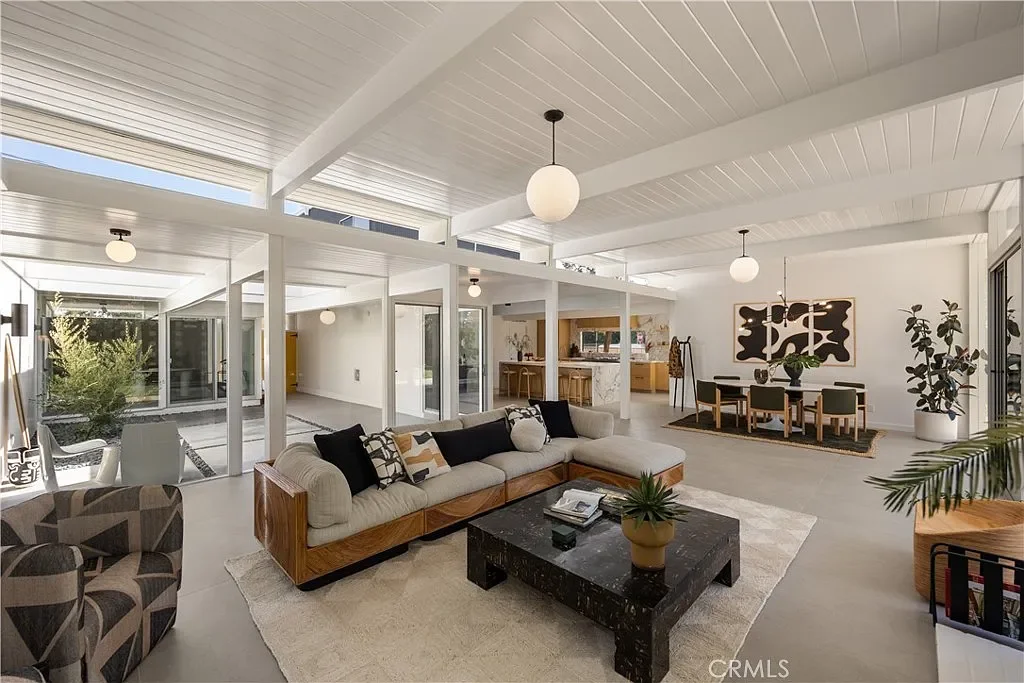
Source: Zillow
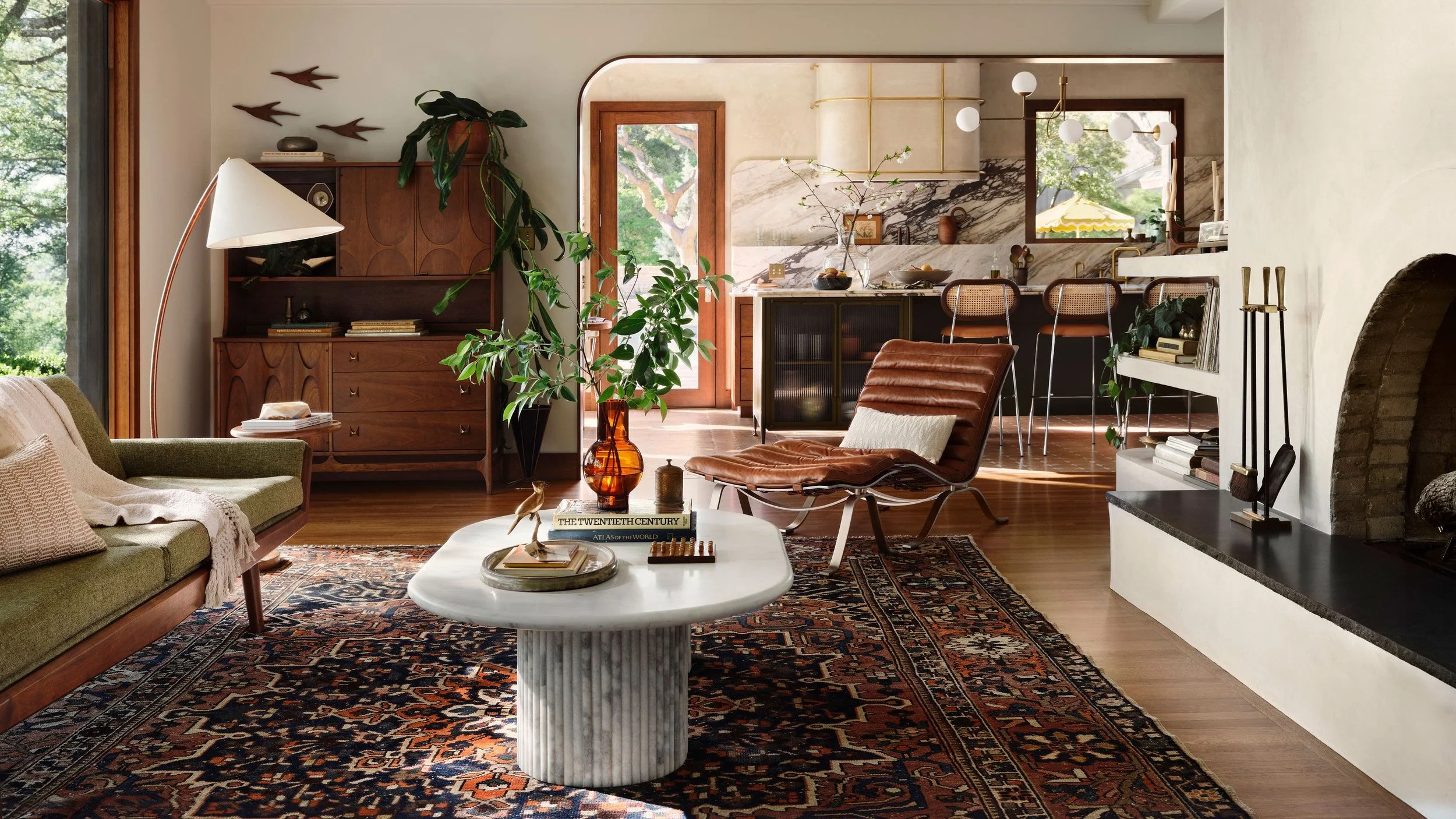
Design by Joanna Gains
Use Planes and Transitions to Shape Space
Mid-century design is all about honoring horizontal and vertical lines. Use the planes of your ceiling and floor to delineate spaces in subtle, architectural ways. Consider stepping down into a sunken living area, varying ceiling heights, or changing flooring material to shift the mood from one zone to the next. These layered transitions allow the home to feel open and intentionally arranged.
Design Insight:
Use area rugs, lighting, and anchored furniture groupings to create cozy, functional zones. A low-slung sofa on a thick woven rug can instantly define a conversation area, while pendant lights or directional sconces help emphasize purpose without interrupting the openness.
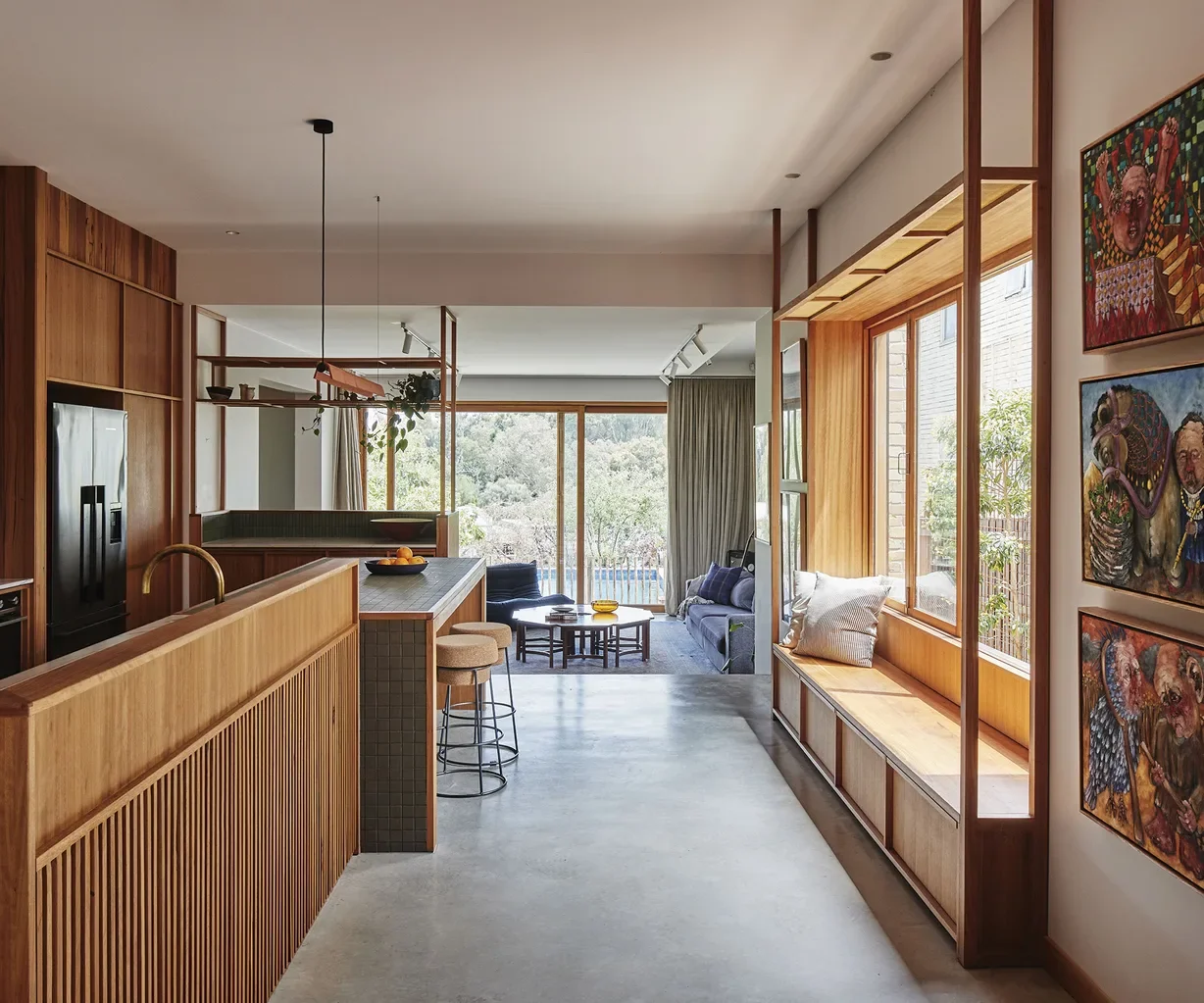
Designed by MRTN Architects Source
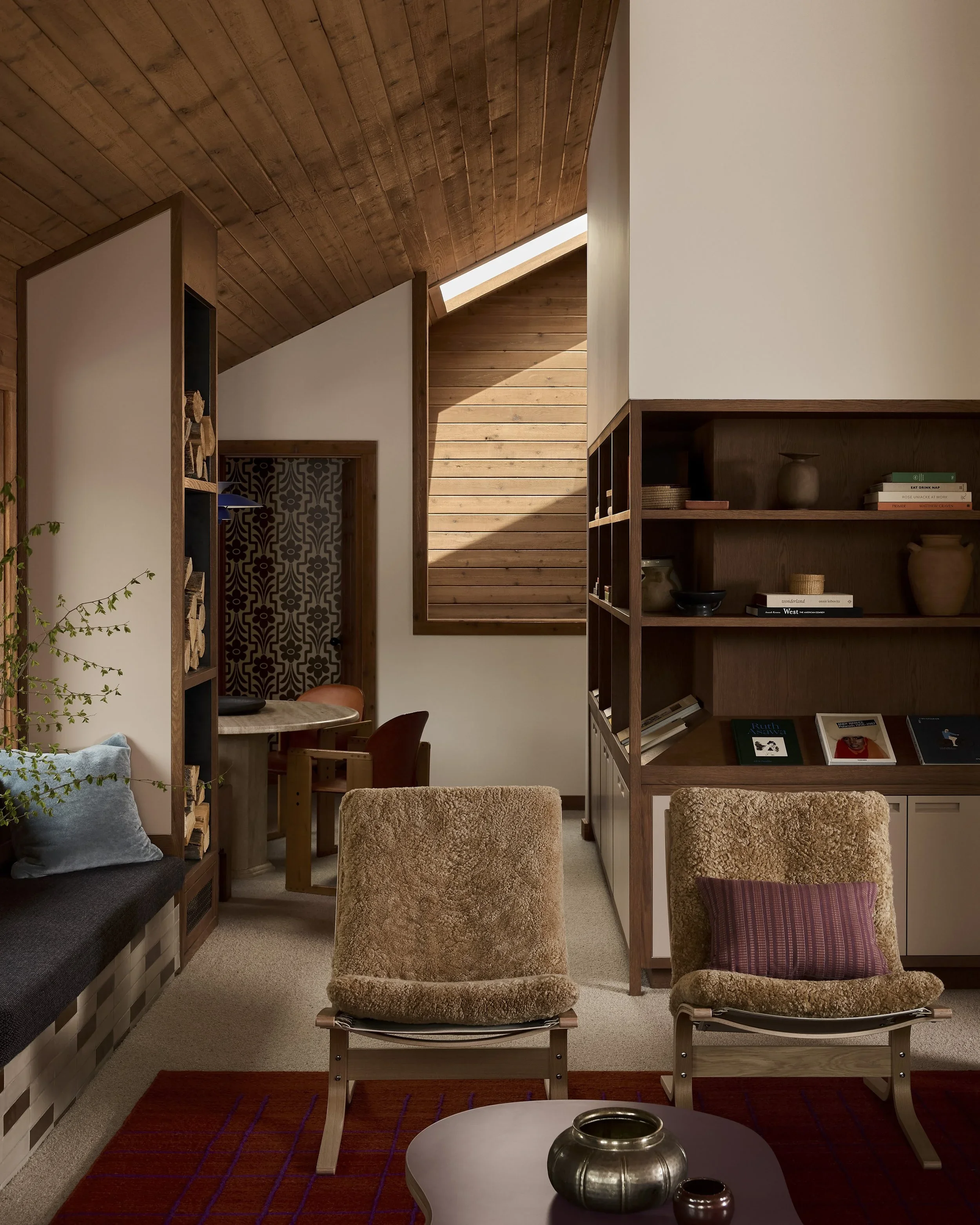
Design by Yond Interiors
Respect the Aesthetic—But Make it Your Own
The mid-century interior design style celebrates simplicity, honesty of materials, and organic forms—principles that still resonate deeply in well-designed homes today. But that doesn’t mean your home has to look like a time capsule. Channel the spirit of the era with clean-lined furniture, warm woods, and low profiles—but make it yours.
Pro Tip:
Modern luxury is all about restraint. Invest in timeless pieces: a sleek walnut console, a sculptural chair with worn-in leather, or a minimalist pendant light that nods to the 1960s without screaming retro. Layer in era-inspired colors—like olive, ochre, or rust—through art, upholstery, or even tile. Just keep the palette curated, not chaotic.
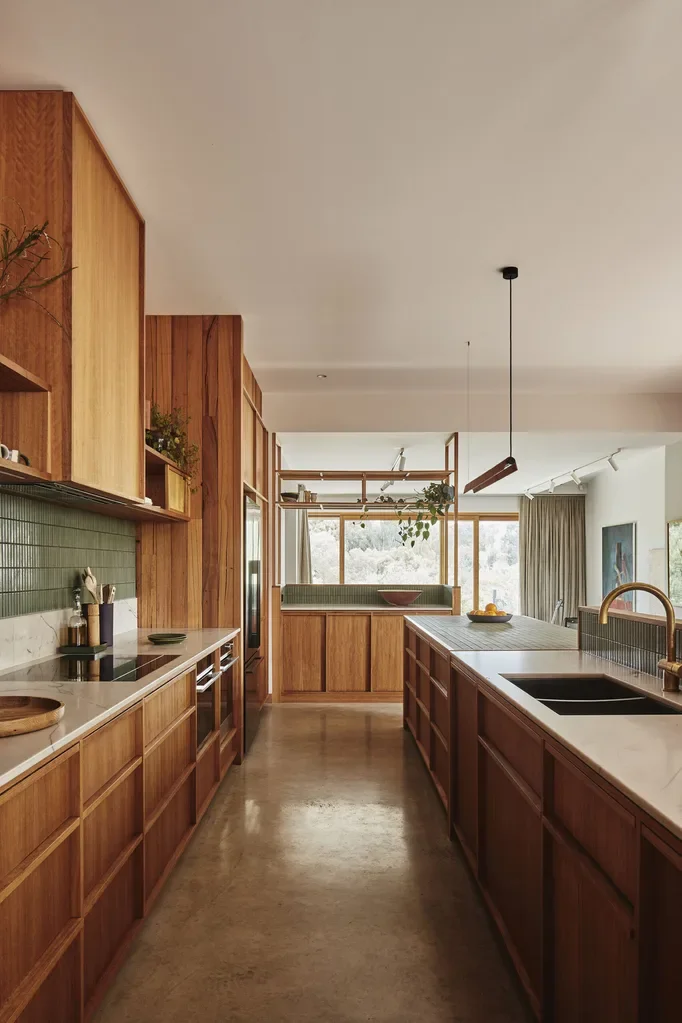
Designed by MRTN Architects Source
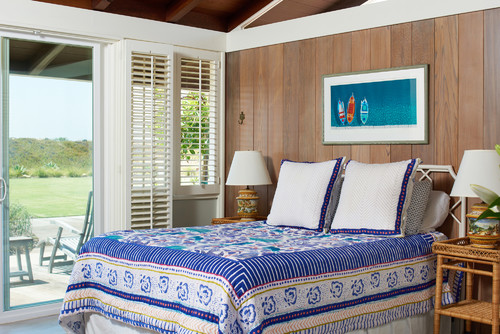
Let Natural Light Lead the Way
Glass walls and clerestory windows are some of the most beloved features in mid-century homes. If your home has them, preserve them. If it doesn’t, now is the time to consider strategic additions. Oversized sliding doors, skylights, and floor-to-ceiling glazing can drastically improve the way your home feels from morning to night. You can also use mirrors or glossy surfaces to reflect light deeper into the home. A mirrored wall behind a floating console or a metallic backsplash in the kitchen can subtly bounce light and expand space.
Pro Tip:
Don’t let window treatments be an afterthought—they should complement the architecture, not compete with it. For sun protection that doesn’t block a killer view, opt for minimal roller shades that filter light without distraction. Where privacy or blackout is needed, floor-to-ceiling drapery on a recessed ceiling track adds softness and function without interrupting the clean lines of floor to ceiling glass.

Design by Studio Mellone
Create Seamless Indoor-Outdoor Connections
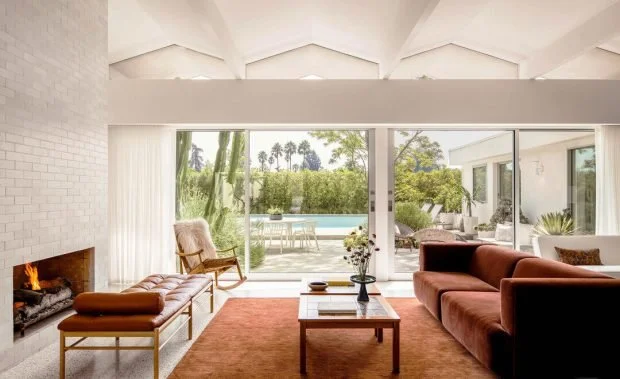
One of the joys of mid-century design is the blur between inside and out. Renovating with this in mind means more than just opening up the back of the house—it’s about material continuity. Think terrazzo that flows from the living room onto the patio, brick that wraps from the fireplace out to the exterior wall, or slatted wood ceilings that stretch across the soffit outside.
Design Insight:
Low-slung rooflines and extended overhangs are part of the DNA. If you're renovating, consider enhancing or restoring these features—they provide sun protection and style in equal measure. And treat your outdoor space as a true extension of the home—furnish it thoughtfully with pieces that mirror your interior materials, and build in elements like outdoor storage, integrated planters, or a modern fire pit.

Design by Studio Mellone

Photo by AG Milworks
Invest in Materials That Stand the Test of Time
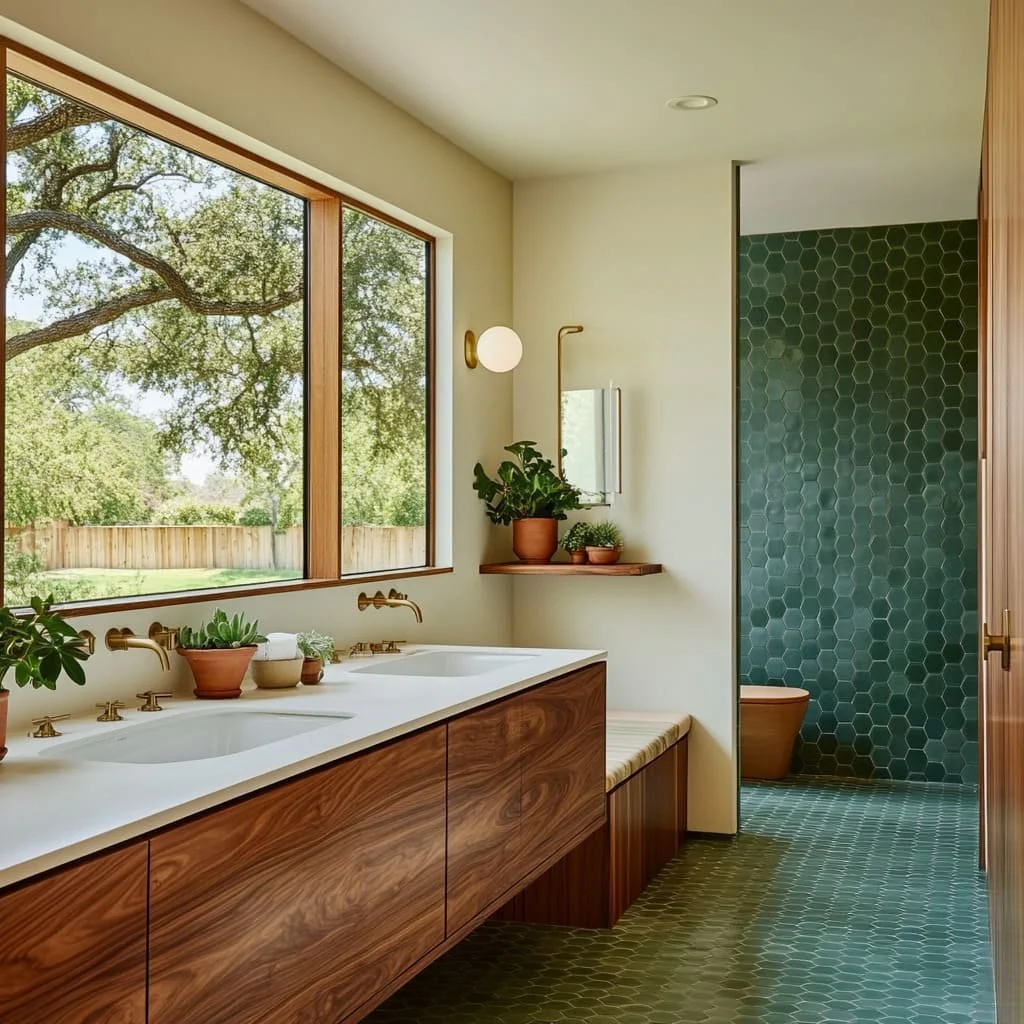
Mid-century homes were built with longevity in mind—and your renovation should follow suit. Avoid overly trendy finishes and instead focus on material integrity. Natural wood, stone, handcrafted tile, and metal finishes that patina over time will feel more authentic and luxurious than anything flashy or synthetic.
Pro Tip:
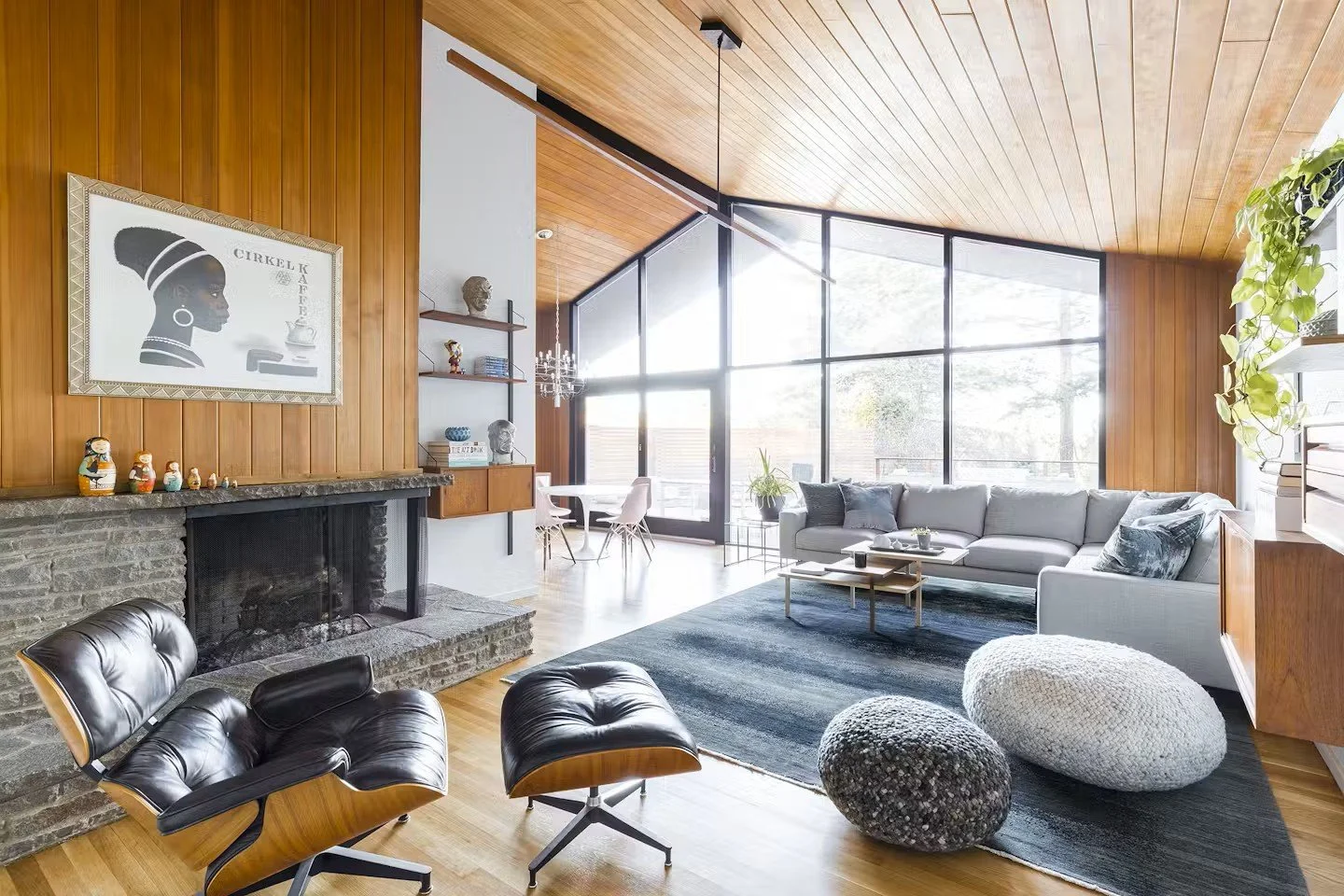
Don’t rip out the good stuff! If you’ve inherited original built-ins, paneling, or wood floors, refinish and reinterpret them. They’re what make your home special.
Designed by Penny Black Interiors
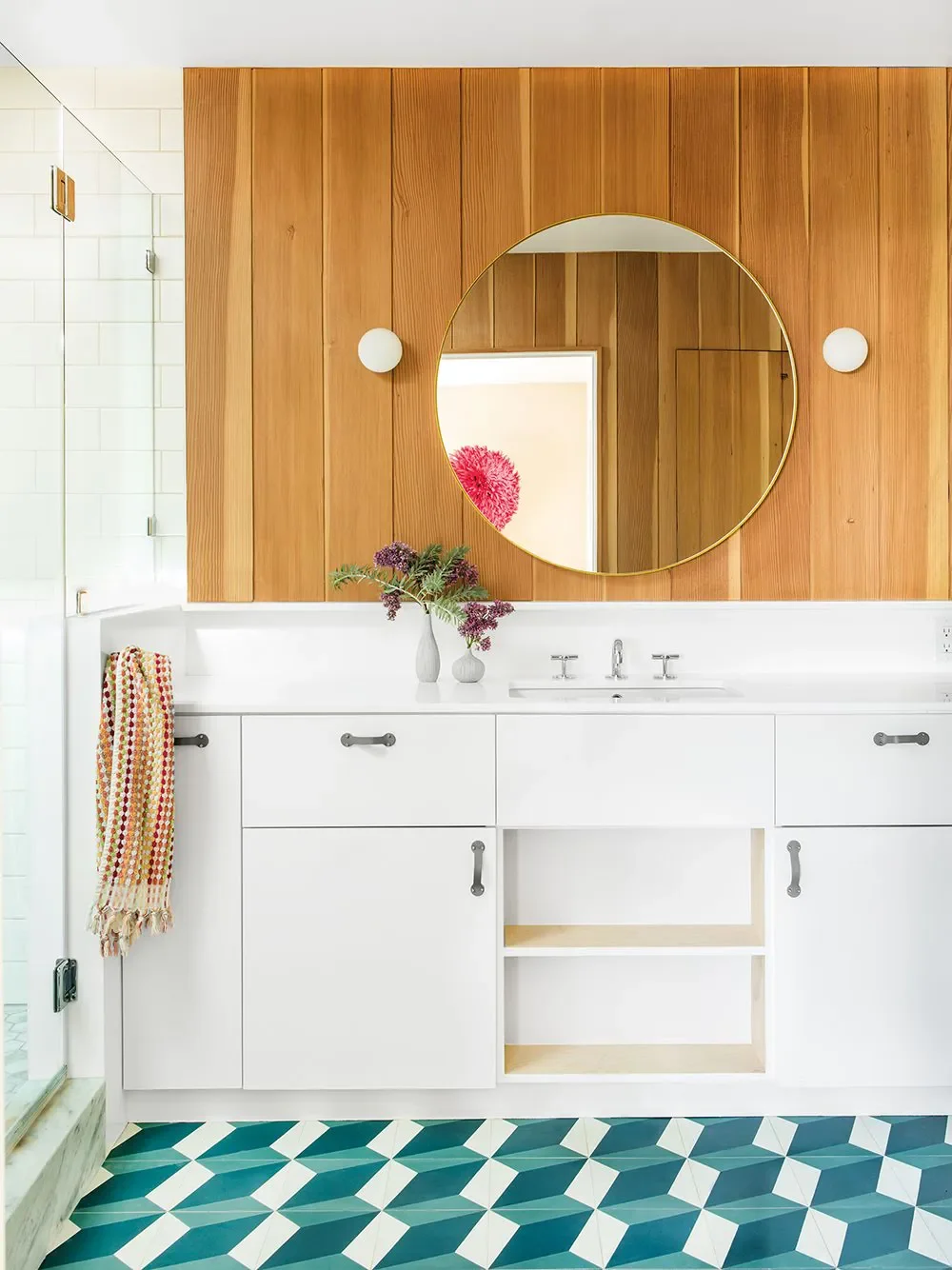
Designed by Barbara Bestor
Layer In Personality—With Thoughtful Restraint
A mid-century home doesn't need a lot of embellishment. But that doesn't mean it should feel generic. Art, textiles, and collected objects should be curated and intentional—each piece telling a bit of your story. The best spaces feel designed, not decorated.
Pro Tip:
Try pairing something vintage (like an Eames lounge or a George Nelson lamp) with something unexpected and current. This juxtaposition gives your home a sense of timelessness that never feels stuck in the past.
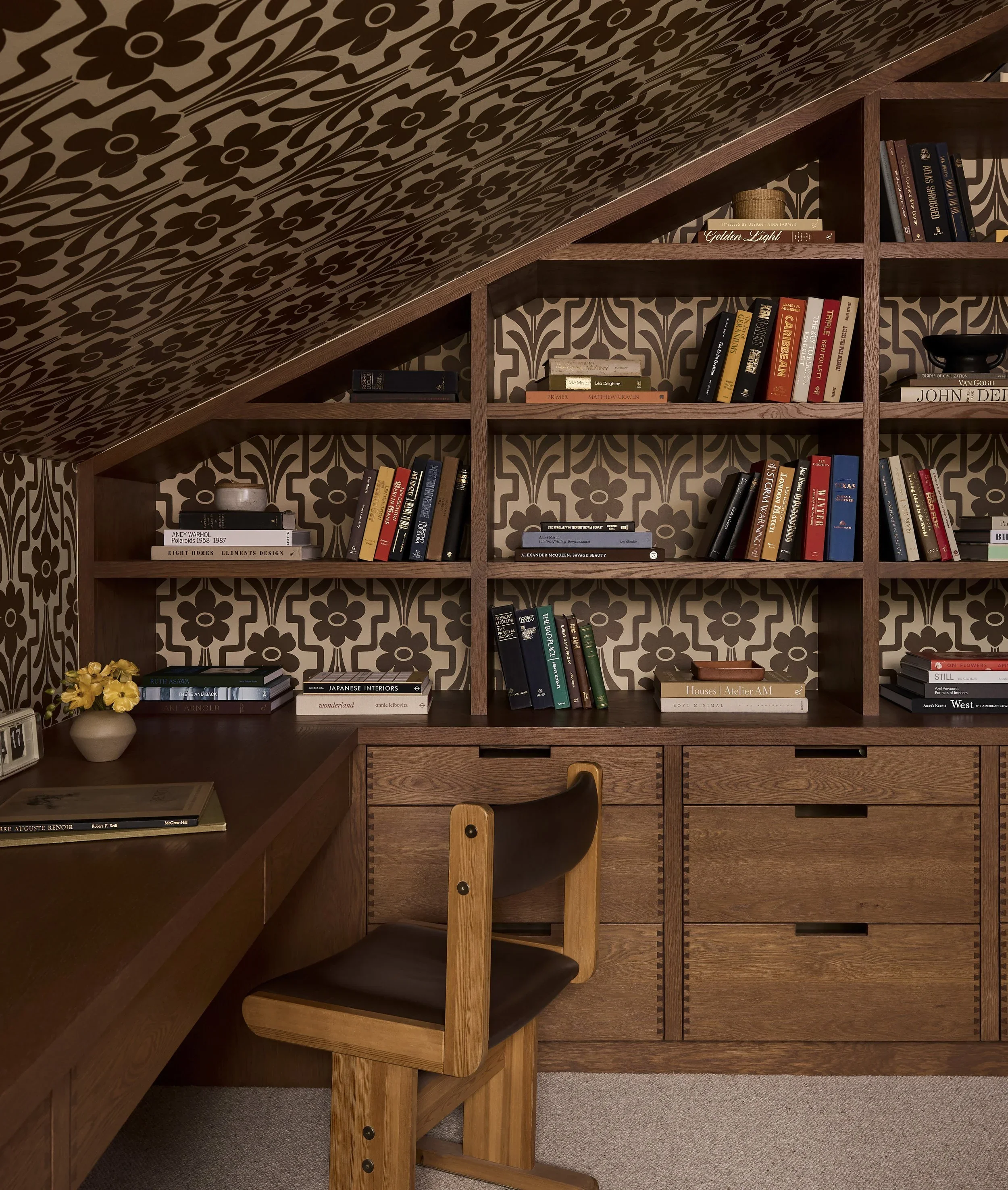
Design by Yond Interiors
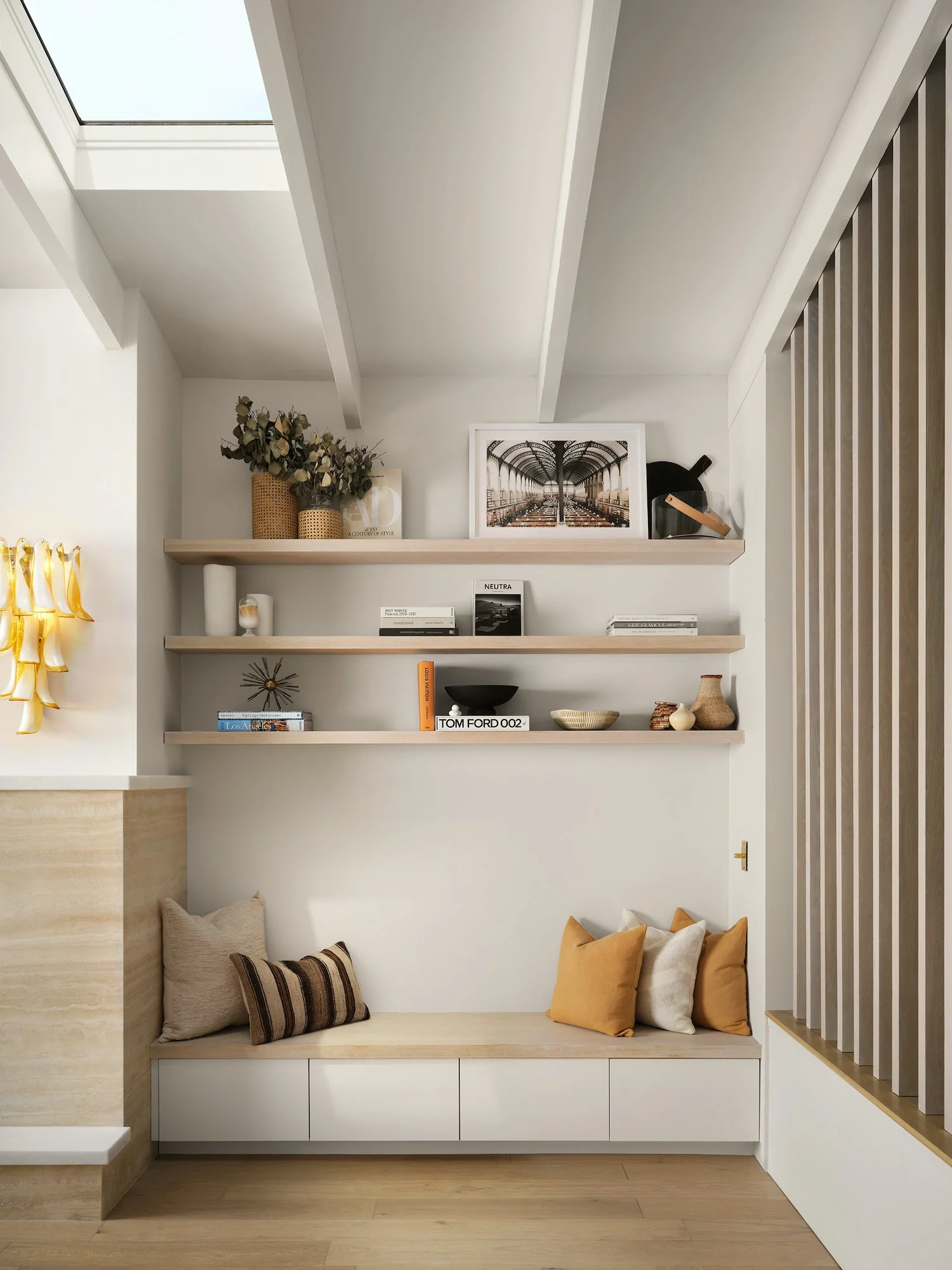
Designed by Christina Kim
Conclusion
Renovating a mid-century home is equal parts preservation and possibility. In Orange County, where indoor-outdoor living is a way of life, these homes are perfectly suited for a thoughtful refresh. Embrace the unique architectural features, keep the materials honest, and infuse your personal style. With the right balance of reverence and reinvention, your home can celebrate the best of the mid-century era while giving you the comfort and tailored functionality of modern life.
Looking for thoughtful, expert design for your Orange County mid-century home? As an Orange County interior designer with a deep appreciation for the mid-century interior design style, we’d be honored to help—reach out to get started.

Why Orange County Interior Designers Love These 6 Countertops
When it comes to renovating your kitchen or bathroom, one of the most critical decisions you'll make is choosing the right countertop material. Your choice will not only affect the aesthetic appeal of the space but also its functionality, durability, and ease of maintenance. With so many options on the market, how do you know which material is the best fit for your home? Today, I’m excited to share why I and many of my fellow designers adore these six countertops, highlighting their pros and cons to help you make an informed decision.
When it comes to renovating your kitchen or bathroom, one of the most critical decisions you'll make is choosing the right countertop material. Your choice will not only affect the aesthetic appeal of the space but also its functionality, durability, and ease of maintenance. With so many options on the market, how do you know which material is the best fit for your home? Today, I’m excited to share why I and many of my fellow Orange County interior designers adore these six countertops, highlighting their pros and cons to help you make an informed decision.
Let’s dive in and discover what makes these materials so fabulous!
1. Quartzite Countertops
Oh, how we adore quartzite! It is more durable than marble but still give a gorgeous organic look making it the perfect combination of beauty and strength. Every slab of quartzite is unique, boasting stunning veining and colors that can make any space feel luxurious and sophisticated. This natural stone is an absolute showstopper.

Kitchen designed by Vieve Interiors
Why We Love It: Quartzite is tougher than it looks. It’s harder than marble, making it super durable and resistant to scratches and heat, which makes it perfect for high-traffic areas like the kitchen. Plus, its natural beauty means no two countertops are alike – perfect for creating a one-of-a-kind look in your home! That it is why it’s our most common choice for kitchens.
2. Granite Countertops
Granite has been a beloved choice for years, and for good reason. It’s timeless, elegant, and incredibly versatile. We’ve used granite in everything from modern kitchens to traditional bathrooms, and it never disappoints.

Laundry room designed by Dwellings Design Group
Why We Love It: Granite is incredibly durable, able to withstand the hustle and bustle of a busy household. It’s also resistant to heat and scratches, making it a practical choice for kitchens. With so many colors and patterns available, you’re sure to find one that fits your style perfectly.
3. Marble Countertops
Marble – the epitome of luxury and classic beauty. There’s something about its elegant veining and smooth surface that exudes sophistication. It’s the perfect choice for those looking to add a touch of timeless beauty to their home.

Why We Love It: Marble is perfect for adding a touch of elegance to any space. It's naturally cool, making it ideal for baking enthusiasts. While it does require a bit more care, the payoff is a timeless, luxurious look that’s well worth it. Consider adding a UV coating to prevent staining and etching. Many of our clients fall in love with the classic, luxurious look of marble, and it never fails to impress!
4. Quartz Countertops
If you’re looking for versatility and durability, quartz is your best friend. This engineered stone offers an impressive range of colors and patterns, making it easy to match with any design aesthetic.

Bathroom designed by Vieve Interiors
Why We Love It: Quartz is practically bulletproof when it comes to durability. It’s non-porous, which means it’s resistant to stains, scratches, and heat – no sealing required! Plus, it’s super easy to clean, making it a practical choice for busy households.
5. Porcelain Countertops
Porcelain is a rising star in the world of countertops, and we’re thrilled to see more and more clients choosing it for their homes. It’s sleek, modern, and incredibly durable, making it a fantastic choice for both indoor and outdoor spaces.

Source: Bedrosians
Why We Love It: Porcelain is incredibly resistant to heat, scratches, and UV rays, so it won’t fade over time. It’s also available in a variety of styles, from marble-look to concrete, allowing you to achieve the high-end look without sacrificing performance. We’ve seen porcelain countertops transform kitchens and bathrooms into stylish, functional spaces that clients absolutely adore.
6. Dekton Countertops
Dekton is like the superhero of countertop materials. This ultra-compact surface is engineered from a mix of glass, porcelain, and quartz, and it’s designed to withstand just about anything.

Source: Cosentino
Why We Love It: Dekton’s durability is unmatched. It’s highly resistant to heat, scratches, and UV rays, making it perfect for kitchens, bathrooms, and even outdoor spaces. The variety of finishes and colors means you can get really creative with your designs. We love how Dekton allows our clients to achieve a unique, high-performance look that stands up to the demands of everyday life.
Conclusion
There you have it! These six countertops – quartzite, granite, marble, quartz, porcelain, and Dekton – are beloved by Orange County interior designers for their beauty, durability, and versatility. Choosing the right countertop is a crucial step in creating a space that not only looks stunning but also stands up to the demands of everyday life. So, get excited about your next design project, and don’t hesitate to reach out if you need some expert advice. Here’s to creating a gorgeous home where you can host amazing gatherings and make wonderful memories for years to come!

How to Remodel Your Orange County Home with Spanish Interior Design Style
Embark on a luxurious journey through the Mediterranean with our trendsetting guide to modern Spanish interior design. Discover how to seamlessly fuse contemporary elegance with the timeless charm of Spanish aesthetics, perfect for Orange County homeowners seeking sophistication and warmth. Let us be your compass as we navigate the intricacies of remodeling your home into a haven of Spanish allure.
Are you considering remodeling your Orange County, California, home with a modern twist on Spanish interior design? If so, you're in the right place. Inspired by the missions of early Spanish settlers, Spanish Revival style architecture has been a part of California for hundreds of years. This timeless style not only pays homage to the state's historical roots but also brings a touch of classic elegance to Southern California homes. In the modern age, a revitalized interest in Spanish interior design has made it a trending choice for homeowners looking to blend the best of both worlds: contemporary aesthetics and a deep respect for the enduring classic style that remains prevalent in the region. In this blog, we'll guide you through the key elements and steps to remodel your Orange County home in the modern Spanish style.
1. Color Palette
Modern Spanish interior design is all about warm and earthy tones, making it a perfect choice for the sunny climate of Orange County. Start by choosing a color palette that reflects the Mediterranean landscape. Opt for shades of terracotta, deep blues, olive greens, and warm neutrals. These colors create a cozy and inviting atmosphere that is characteristic of Spanish homes. To modernize the look, pair those colors with a heavy dose of white to give it a fresh appeal.

Photography: Nayan Soni; Source: Architectural Digest
2. Rustic Elements
Spanish design often incorporates rustic elements to bring in a sense of history and authenticity. Exposed wooden ceiling beams that support the architecture also offer a decorative element characteristic of the Spanish interior design style. Other rustic elements to consider are vintage spanish doors, wood windows, reclaimed wood furniture, and terracotta tile flooring. These elements not only add texture and depth, but will and warmth to your Orange County space.

Photography: Ryan Garvin; Source: Intimate Living Interiors
3. Tilework
Spanish tiles, especially decorative ceramic, terracotta, or porcelain tiles, are a hallmark of Spanish interior design style. Whether incorporated subtly in stair risers, as a backsplash to provide a bold pop of color in your kitchen or bathroom, or if you’re tiling an entire floor, tiles made of traditional patterns like arabesque or quatrefoil can make a striking statement in your Orange County home.

Source: fireclaytile.com
4. Archways and Niche Spaces
Arched doorways and niche spaces are common architectural features in Spanish homes. Quite often, Orange County homes already showcase these architectural elements, so if you're remodeling, keep them! For a more modern look, consider updating the arches with a more smooth round or oval shape if the arches are originally segmented. If your home doesn’t have existing arches, consider incorporating arched doorways to add character, elegance, and a sense of flow between rooms, or, if possible, add a domed ceiling to make the space feel wide open and airy and create a sense of grandeur.

Photography: @discinteriors; Source: The Spruce
5. Wrought Iron Accents
Spanish interior design style is characterized by a few key elements, wrought iron accents being one of them. Black wrought iron railings are commonly found in Spanish style home designs. A wrought iron railing on your staircase is also a modern way to make a vast impression. You can also use wrought iron in your lighting fixtures and decorative pieces. Simplifying a more intricate iron pattern while maintaining some details is a timeless way to add a touch of sophistication to your modern Spanish style interior design. In fact, wrought iron is a classic design feature has the ability to effortlessly blend in with other decor elements making it a versatile choice that adapts to changing design trends.

Photography: Deborah Shields; Source: Redfin
6. Textiles and Fabrics
Rich fabrics are a traditional part of Spanish interiors. Incorporating textiles and fabrics with a Spanish flair to traditional modern homes helps create a cozy and inviting ambiance. Consider adding vintage embroidered throw pillows to your living room sofas, chairs and other accent pieces, as well as bedroom furniture. Another way to add flair to your modern Spanish interior design style is to use colorful area rugs or rich drapery on iron rods throughout your home. These textiles can infuse vibrancy and personality into your Orange County space.

Source: All Sorts of by Amber Lewis
7. Spanish-Inspired Furniture
When it comes to choosing your home furniture, look for modernized pieces with a traditional Spanish influence. Dark wood furniture with ornate carvings, black metal details, or distressed finishes work well. Don't forget to add comfortable seating options like leather sofas and armchairs. Keep in mind, it doesn’t have to feel like the heavy, chunky furniture that was popular decades ago. Instead, you could opt for more delicate pieces in the same materials for an updated design.

Photography: Roehner + Ryan; Source: Luxe Interiors + Design
8. Decorative Accents
Spain has a long history of pottery making so it’s no surprise that many Spanish style homes have lots of beautiful pottery pieces in earthy colors and neutral tones. Strategic placement of colorful pottery and ceramic vases throughout your home and garden can make a bold statement. Other decorative accents such as wrought iron candle holders, decorative mirrors, and Spanish-inspired art can help tie the Spanish theme together. These small details can add the needed touch to your modern Spanish interior design style.

Source: @peter.lyden
9. Lighting
Spanish homes often feature decorative ambient lighting. Chandeliers with wrought iron or Moorish-inspired designs are excellent choices. Use warm, soft lighting to create a cozy and inviting atmosphere in your Orange County home. Consider updating your recessed can lighting to smaller flush trim-less recessed lights that disappear into the ceiling for a luxury modern detail that allows your beautiful decorative light fixture to take center stage.

Source: Lori Clarke Design
10. Greenery
Spanish homes are recognized for beautiful courtyards with lush greenery, so incorporating plants can easily bring a little Spanish charm and warmth to your space. Adding greenery with potted plants and indoor gardens to evoke that feeling of an outdoor oasis reminiscent of the beautiful Orange County landscape right outside your doors. The Fiddle Leaf Fig, Snake Plant (Sansevieria), Bird of Paradise, Philodendron, Monstera Deliciosa, and Pothos are all plants that thrive in indoor conditions but also contribute to the Mediterranean aesthetic.

Source: Decorilla
Spanish-style interior design is one of the most popular styles of home décor today. Its simple, sophisticated appeal has made it a favorite among homeowners who want to bring an elegant, timeless touch to their living space. Remodeling your home in the modern Spanish interior design style can bring that beautiful Mediterranean charm and elegance all the way to your Orange County home. Embrace the warmth and character of Spanish design, and you'll have a space that's both stylish and comfortable for years to come. With the right colors, rustic elements, decorative tiles, and carefully selected furnishings and accents, you can create a beautiful and inviting Orange County oasis.
Need help? Viève Interiors is a full service interior design studio serving luxury residential and select commercial clients in Southern California and as far as Las Vegas, NV. With an attention to detail and an unparalleled technical edge we embrace functionality and personal expression of style, designing environments that are cohesive, polished, and tailored to each client. Contact us today to book your discovery call.
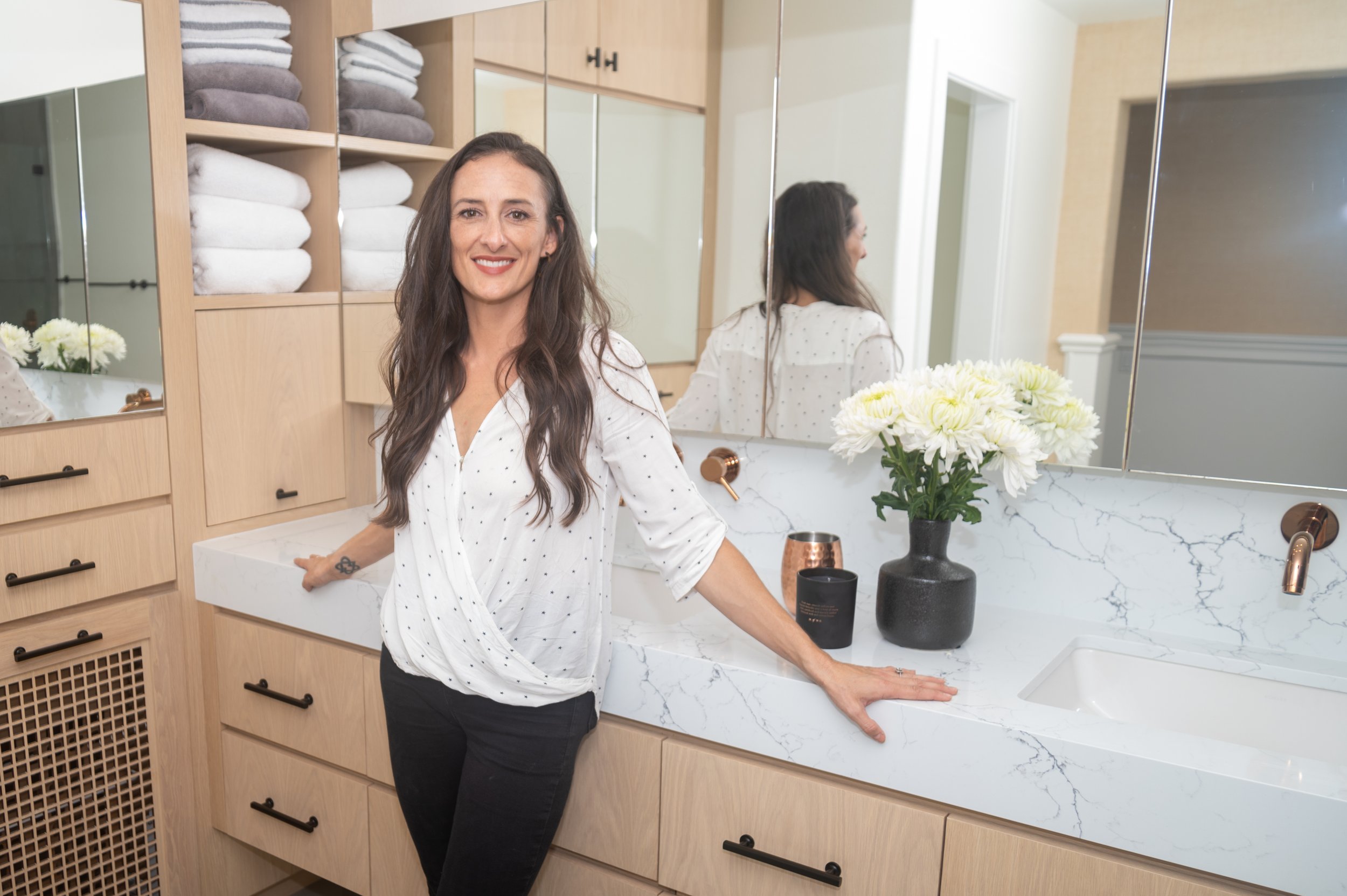
5 Must-Haves for Your Luxury Bathroom Remodel
Want to create a luxury bathroom of your own? If you’re doing a complete remodel of your bathroom, with careful planning and a little forethought, you can create a luxury bathroom for yourself. From an experienced Interior Designer, here are 5 must haves for your luxury bathroom remodel.
What is luxury? A condition of abundance or great ease and comfort. When designing a luxury home, one of the key factors to keep in mind is functionality, so everything is easily accessible and your comfort comes first! The great thing is, if you’re doing a complete remodel of your bathroom, with careful planning and a little forethought, you can create a luxury bathroom for yourself. Don’t worry, we’re here to help you get that upscale spa experience in your own home!
If you follow along on our Instagram you may have already seen these, but here’s a round up of five must-haves that we love to include in our luxury bathroom remodels. Click the link for each to see it in action. And don’t forget to write these down on your list of bathroom must-haves, or better yet, pin them to your “Luxury Bathroom Remodel” pinterest board so you can save the photos and come back for the details later.
Toe-Kick Lighting on a Motion Sensor
Toe-kick lighting on a motion sensor is something we always recommend. Our clients absolutely love this feature when their project is done and it comes time to live in their new space. To have that little dim light kick on as you walk in for a late-night bathroom visit is such an awesome little luxury in your bathroom remodel. All you need to do is put it on your lighting and electrical plan, or tell your electrician, and you can add this to any vanity that has that recessed toe-kick space. No more fumbling for the light switch or tripping over your own feet in the dark!
2. A Pull-Out with Electrical Outlets for Your Hot Tools
This luxury bathroom remodel must-have is one the ladies absolutely love and, no surprise, it became one of our most liked instagram reels as a result. When we layout a custom bathroom vanity design, we love to add a drawer with electrical outlets at the back and canisters built-in for your hair-dryer, flat iron, curling iron, or whatever hot tools you may have. That way your hot tools are ready to go without having to unwind it from a messy drawer and plug it in. With safety in mind, docking drawer outlets even offer a function to turn off the power when the temperature gets too hot.
Pro tip: make sure to consider which hand you use to blow dry your hair so you can place it on the correct side and avoid getting tangled up in chords.
3. Good Lighting at Eye-Level
Good lighting is one of the biggest factors in designing a luxury bathroom. While downlighting is great over kitchen counters or workspaces, it’s less-than-ideal lighting for putting on makeup or getting ready for the day. Good lighting that illuminates your face is crucial for a luxury experience. You can accomplish this by adding sconces flanking a mirror at eye level or above the mirror. Adding statement pendants is another fun option, but make sure the light is diffused and bright enough, or add an additional light source like LED back-lighting around your mirror. For a clean minimalistic look, consider a lighted mirror.
4. Additional Hidden Electrical outlets
These days we have so many gadgets to plug in—from electric toothbrushes and razors to skincare products and more. And while all these gadgets may mean a luxurious self-care routine, having everything plugged in and on display on your countertop does not give the feel of a luxury bathroom. Tip number four on our list of must-haves for your luxury bathroom remodel is to take stock of what you need in terms of electrical outlets and find creative ways to hide them!
Pro tip: Inside your medicine cabinet is the perfect place to hide an outlet for an electric toothbrush. You could also tuck an outlet behind an appliance garage cabinet or add another docking drawer.
5. Hidden Laundry Hampers
To truly achieve that luxury spa experience in your newly remodeled bathroom, make sure to include a cabinet that will hide your laundry hamper full of dirty clothes. That way you can step into your new luxury bathroom, throw in the day's attire (forget about laundry until laundry day) and climb into a soothing bath to relax in your new oasis.
For more tips on how to remodel your home like a pro, download our FREE, comprehensive home remodel planning guide for remodeling success!

How Do You Know When You're Ready to Hire an Interior Designer?
Is your home remodel causing overwhelm? Are you short on time? It may be time to hire an interior designer. How do you know for sure? Here are a few big signs to let you know you’re ready to hire an interior designer!

When it comes to your upcoming home remodel, are you short on time? Do you feel lost or overwhelmed turning your personal style into a beautifully designed room? It may be time to tap out—and hire an interior designer! Working with an interior designer helps save you time and money, all while removing the stress, and putting the fun back into redecorating and remodeling your home.
Whether you’re looking to Transform Your Average Kitchen into Luxury with 12 Stunning Remodel Must-Haves or you are ready to incorporate some of the Hottest New Interior Design Trends for Homes in Newport Beach in 2023, an interior designer will simplify the process and provide you with a home that’s both functional and beautiful. But, how do you know that you’re ready to hire an interior designer? [Hint hint: most of our client’s would have benefited from hiring us earlier.] Here are a few sure signs that it is time.
1. You’re moving into a new home.
Even if you opted for a brand new or recently renovated house, in order to really get your new home “turnkey” ready for you to move in and start living your best life, you are bound to require some different furniture, area rugs, and decor than you had in your old home. Chances are you have increased or decreased square footage, have additional rooms or rooms that take a different shape, are working with a new layout, or may have moved to a different state with a more predominant design style than your old home’s location—all of which require you to determine what furniture should stay, and what new items you will need to purchase. Or perhaps you would like to add a more modern interior design style, smart technology, or organizational upgrades to your home. An interior designer can help you accomplish all of your goals (without the headache).
On the flipside, maybe you bought a fixer-upper and some major renovations are in order. Choosing an interior designer who has relationships with contractors throughout the area is a must. Whenever you buy a new home, hiring an interior designer to help you assess the situation should be first on your to-do list!
Designed by Genevieve Chambliss while working at Dwellings Design Group
2. You are planning mid-sized to major renovations.
Interior designers are responsible for coordinating and managing your home renovation projects from start to finish. Therefore, if you are planning mid-sized or major renovations, you should definitely be ready to hire an interior designer. In fact, that should be your first step. When it comes to remodels, many homeowners underestimate the time and energy needed for their project and quickly become overwhelmed when they try to do it on their own. Your general contractor will want plan and elevation drawings, and expect you to have all the details figured out from plumbing fixtures and tile to selecting door knobs and baseboards. Interior designers will tackle everything from conceptual design and space planning to the installation and styling—and all the details in between.
When it comes to getting started, you’ll need an expert with great spacial skills to rework and re-envision your space to meet your needs and ultimately enhance how you live. Your interior designer will:
Define the design direction and palette
Improve flow patterns
Add desired features
Furniture space plan
Incorporate existing furniture
During the next phase of your renovation, your interior designer will develop the design by addressing all the little details to create a cohesive look that evokes your personal style.
Develop a detailed set of plans and elevations to communicate the design to your contractor and tradesmen
Select cabinet style, custom inserts and design bespoke millwork details
Specify flooring finishes, countertops, tile, and paint colors
Specify the plumbing fixtures, light fixtures, etc.
Provide 3D renderings to help you envision your future dream home
Your interior designer will also lead you through furniture and accessory selections. They will purchase and procure all your items, communicate with vendors to track and expedite shipments, coordinate deliveries, and then install all furniture and style your home with artwork and home decor for a finished cohesive look.
If you are in need of major renovations, check out these resources:
3. You feel lost or overwhelmed at the thought of “redecorating.”
One major indicator that you are ready to hire an interior designer is that you are overwhelmed. It is OK to ask for help and to opt out of DIY options when it comes to redecorating your home. Not everyone has a knack for marrying personal style with what’s on trend and what is functional. Quality interior designers have gone to design school, have a natural instinct for attention to detail coupled with an unparalleled technical edge, and have plenty of experience designing luxury spaces that are cohesive, polished, and tailored to each client. There is no need to rely on yourself if you don’t want to!

Designed by Genevieve Chambliss while working at Dwellings Design Group
4. You have some idea of the design style you like—or don’t like.
Before you are officially ready to hire an interior designer, it is a good idea to know what items or styles you are drawn to and/or what styles you definitely want to avoid. Try making a list of furniture or art pieces in your home that you can’t part with and/or start a Pinterest board where you can save images of entire rooms, specific design styles, furniture, art, colors, finishes, etc. that you can show your interior designer.
5. You have a general idea of your timeline and know your budget.
We will get into this in greater detail a few points down, but you might not be ready to hire an interior designer if you have zero sense of what you’d like to accomplish in your home or how much you are willing to spend. These are two questions that you need to ask yourself before you are ready to start your project. You can always meet with an interior designer (or a few) to gain a better understanding of what home renovations cost these days, and a realistic idea of how long remodels take. Once you have some idea of what you want and what you are ready to invest in your home, an interior designer can help you determine if your project and budget are realistic or if you may need to phase it out to accomplish your goals. That way you can plan for the future and determine if you truly are ready to hire an interior designer.
6. You are open to suggestions.
Being open to suggestions is a big (and often overlooked) aspect of being ready to hire an interior designer. When you are working with someone to transform your home into your luxury dream home, you will need to be open to new ideas and, unfortunately, sometimes hearing that one of your ideas won’t work or be ideal for your space. If you can be open to feedback and suggestions, a good interior designer will help you find better solutions than you could have dreamed up so that you’re overjoyed with the outcome of your newly designed home.

Designed by Genevieve Chambliss while working at Dwellings Design Group
7. You have a pretty good understanding of the interior design process.
It is your interior designer’s job to make sure that you have a solid understanding of the interior design process you are about to embark on, and that all your questions have been answered. We touched on this process a bit when we discussed mid-sized to major home renovations, but for a more comprehensive overview of the interior design process, you can view this page.
8. You’ve found an interior designer who fits your style, timeline and budget.
Hopefully by now you have ended your search for the top interior designers from Newport Beach, CA (shameless plug: we made this list) and you have found someone who matches your style, and can work within your timeline and budget. To find someone who matches your style, you can review the interior designer’s portfolio. However, keep in mind that an interior designer’s job is to decipher your personal style and bring it to life. That means you don’t necessarily need to love the same design style or decor, but rather that your interior designer will listen to your ideas, pain points, functional needs, and goals, and has the eye for aesthetics, technical background, and plenty of experience to get the job done correctly.
Regarding timeline and budget? At this point, you should have gained a realistic idea of how long your project will take and how much it will cost. This will depend on the scope of your project. If you’re planning a major renovation, your home remodel could take up to a year! Make sure your interior designer is honest with you—delivery times are still slower and prices are still up. Don’t choose an interior designer who will compromise their integrity to get you to choose them, or someone who will compromise quality. Alternatively, a good interior designer will show you where you can save money and where you should put the majority of your budget to achieve your goals and get the best return on your investment.
Check out 5 Things to Look for When Hiring an Interior Designer in Orange County for more information.
9. You and your interior designer have decided what interior design services are best for your needs.
There are many different ways to work with interior designers based on your specific needs. Here are a few of the ways you can work with us:
Full-Service Design: top-to-bottom service for your luxury remodel or new construction. This service includes a full custom design tailored to your style and the way you live. With this done-for-you service we also execute all purchasing and procurement, project management, as well as final styling so your new, beautiful home is turnkey ready for you to kick up your feet, relax, and enjoy.
Virtual or Design-Only Services: perfect if you have time to devote to your remodel or furnishing project but lack the expertise. In this case, we will select finishes, fixtures, furniture, and more and provide detailed drawings. Then you take it from there to execute the design. With this service, you are responsible for all purchasing and procurement as well as project management. This service can be done locally with an initial on-site consultation or virtually with customer-provided dimensions.
Designer-On-Call Service: if you're unsure how much or how little help you need, or just have some small design details you'd like help with, then a Designer-on-Call package might be right for you. Get our expert design advice, paint color selection, art selection, or a professional floor plan or elevation drawing for your contractor at our hourly rates.

Designed by Genevieve Chambliss while working at Dwellings Design Group
Ready to schedule your discovery call? Contact us today!
For more information on hiring the right interior designer for your project, check out these additional resources:

5 Ways to Use Onyx Marble in Your Home Interiors
When onyx is used in interior decoration, exquisite patterns and colours can create a unique and luxurious look. Fine-grained onyx marble stone is available in various colours like yellow, brown, green, black, white, and pink. It is a versatile material that works well with different themes and decors. Therefore, it is a popular choice among architects and interior designers. Let’s look at five different ways you can use onyx in your home décor to create a luxurious look.
Onyx is a unique marble mined from limestone caves created by flowing warm springs over thousands of years. When onyx is used in interior decoration, exquisite patterns and colours can create a unique and luxurious look.
Fine-grained onyx marble stone is available in various colours like yellow, brown, green, black, white, and pink. It is a versatile material that works well with different themes and decors. Therefore, it is a popular choice among architects and interior designers.
Let’s look at five different ways you can use onyx in your home décor to create a luxurious look.
1.Onyx Marble Flooring
Using onyx marble for flooring can be expensive. But the unique appearance of onyx can help you create a luxurious interior design. High-end hotels and offices also choose onyx for their floors to add sophistication to a minimalistic theme. Choose from a wide range of pastel, light, or dark colours for the right look.

2. Onyx Marble Accent Wall
Consider creating an accent wall in your dining or living space. Use onyx marble tiles to cover a section or an entire wall to create a grand backdrop to your lifestyle. Choose a warm tone like honey-yellow, or go bold with a deep red onyx. Remember to supplement your accent wall with the proper lighting for a beautiful look.

3. Onyx marble in Kitchen Backsplash
A unique kitchen backsplash can liven up the look and ambience of your entire kitchen. You can add a slab of colourful onyx marble in contrast to your kitchen theme or choose something that fits into the overall look. For example, if you have a clean white-themed décor in your kitchen, choose a green onyx to give your kitchen a warm glow.

4. Onyx marble Bathroom Features
Onyx is a richly patterned translucent stone. You can use it as a foundation for your wash basin, as the material for your bathroom counter, or to frame the bathroom mirror. Add a dash of opulence to your bathroom using onyx in small doses.

5. Onyx marble Staircase
A backlit onyx can create a beautiful look for your staircase and give it a warm glow. Turn your staircase into an artistic expression using richly veined, colourful onyx marble on the steps. It is a great way to make the staircase beautiful and add luxury without clutter.

Using onyx to decorate your home is recommended, but it is not as simple as it looks. Before shopping for onyx marble stone, read about the material. Find out more about the different types of onyx available in the market and the corresponding prices. Doing your research before interior decoration will help ensure you make the right choice.
It is always better to conceptualize the theme of your interiors before shopping. Now that you know a few ways of using onyx in interiors, you can decide where you want to use it and which variety to choose.
Author Bio:
Aparna Rao has a great passion for interior design and decor. Her design mantra is that the interiors of any space should be designed keeping in mind functionality and aesthetics. She works as a content marketer for Stonex India, a leading marble manufacturer, and has gained valuable insights into the marble stone industry. Her extensive knowledge of different types of stones and their properties as well as interior design is what makes her content stand apart and is appreciated by her readers. Through her content, she also offers creative, innovative, and effective design and decor solutions.

Hi friends! I’m Genevieve, ower of Viève Interiors. With an attentive ear, savvy technical skills, and a knack for style, I love helping clients create beautiful, polished and personalized homes that they love. For more information about how we can help you design your dream home, reach out to set up a complimentary discovery call.