

5 Reasons Why You Need an Interior Designer Before Hiring a Contractor
Are you embarking on a home renovation journey? If you want to start off on the right foot, end with your dream home vision realized, and go through the whole process without pulling out your hair, then we highly recommend you start by considering the crucial role of an interior designer. Here are 5 compelling reasons why engaging with a designer before hiring a contractor is the smartest move you can make in order to build your dream home.
Are you embarking on a home renovation journey?
If you want to start off on the right foot, end with your dream home vision realized, and go through the whole process without pulling out your hair, then we highly recommend you start by considering the crucial role of an interior designer. Here are 5 compelling reasons why engaging with a designer before hiring a contractor is the smartest move you can make in order to build your dream home.
1. Accurate Cost Estimates
Without a preliminary plan in place, contractors won’t know if you want to add new decorative lighting, tile an entire focal wall instead of just the shower, or add decorative wood paneling. That means their bid will typically be lower than what is actually needed to execute your vision. An interior designer can provide detailed drawings that yield more precise estimates. Armed with a clearer understanding of the project's overall cost, you can make better-informed decisions and be prepared for any financial implications.
One example: Sally Smith came to me after she’d already hired a contractor who bid her $300k for her whole home remodel without materials. I told her the number sounded unrealistically low. While she knew the cost would increase, she was shocked when change order after change order brought the total cost closer to $800k to give her the design she had wanted from the beginning.
2. Seamless Timing and Coordination
Good design takes time! Beginning the design process early helps ensure smooth collaboration between designers and contractors. Don't wait until after the demolition has begun to hire your interior designer! Engaging a designer first will place a reliable roadmap ahead. This approach yields multifaceted benefits: it provides valuable insight into comprehensive costs, prevents time constraints or delays and safeguards against impulsive design choices that often lead to costly change orders. At Vieve Interior’s we have a tried and true process to make sure our projects run smoothly.
Pro tip: Give yourself at least one month of design time for a single room, and up to 10 to 12 months for a full home redesign before construction begins. That way you’ll be able to get contractor bids, start the permit process, and have everything in order before you break ground.
3. Avoiding Design Mishaps
Doors & Windows and Appliances, oh my! These big ticket items have long lead times and must be ordered well in advance. Having a designer onboard from the start prevents design limitations that could compromise your space's functionality and aesthetics.
A note: A designer will holistically consider whether windows should come all the way to the floor, or if you need wall space below for a nightstand or cabinet? They will determine if wall ovens are the most functional for you or if a range with ovens below will better create the open and airy feel you want in your new kitchen? Without knowing details like this ahead of time, you might order costly windows you don’t need or be stuck with a layout that isn’t inline with your vision.
4. Expert Design Insight & Curated Material Selection
General contractors are focused on execution and are typically NOT design experts! A good Interior designer will consider your vision, aspirations, and goals and infuse their artistic insight to turn your vision into a stunning reality. They also offer access to exclusive suppliers, high-quality materials, and unique fixtures and furnishings to elevate your home’s sophistication, ensuring it reflects your taste.
A note about Design-Build contractors: While a “design-build” company may be helpful, they are typically providing the drawings strictly to get permits and get your project going. They are not experts at curating tailored material selections or coming up with custom cabinet solutions. Most don’t do these things at all and and rely on you to select every finish, fixture. Some may offer material selection services, but limit your options to a small selection of vendors they favor for profit reasons. An interior designer will help ensure you don't get locked into subpar solutions that compromise your aesthetic or functional preferences.
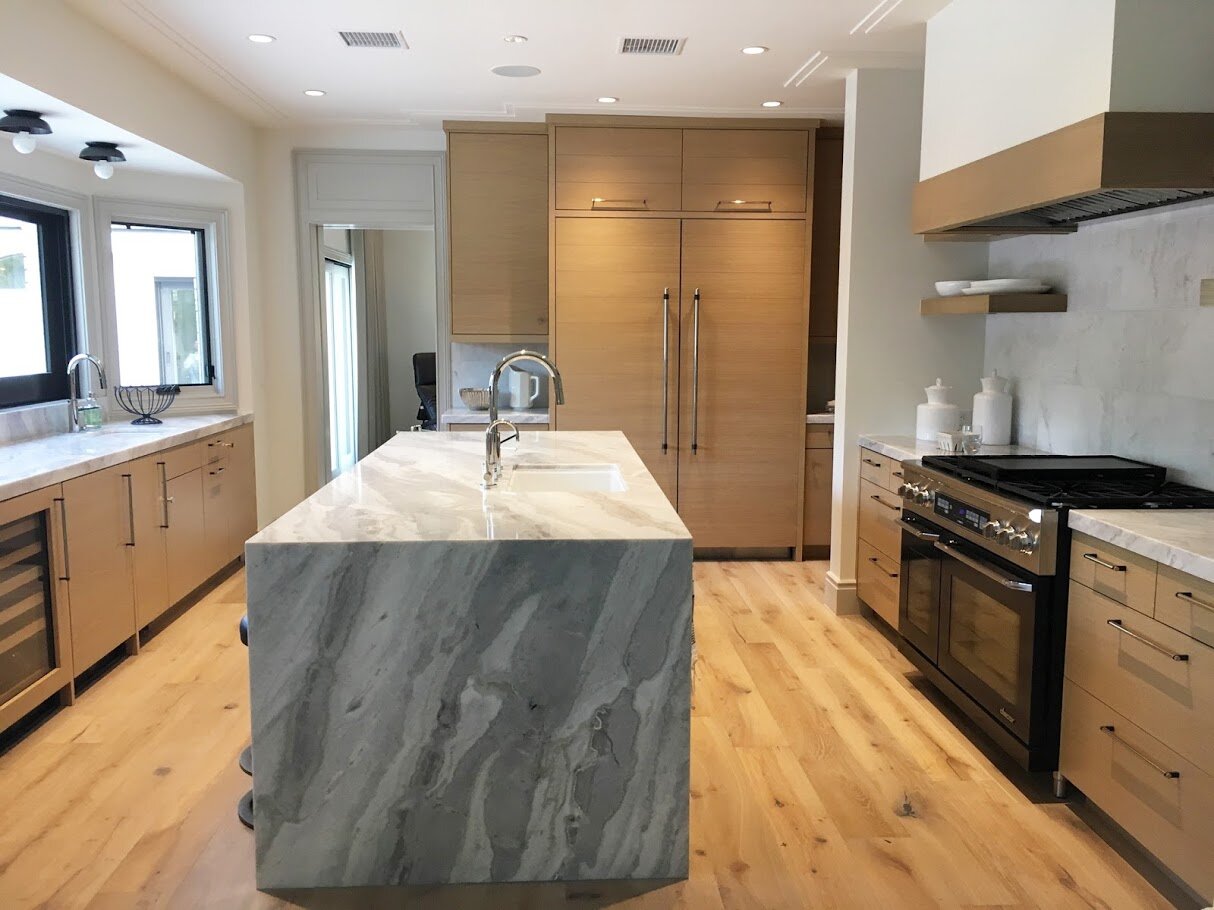
One example: When I was brought into Mary Joes project I discovered her contractor was trying to push her into using man-made quartz countertops when she specifically wanted the unique glamor of Cristallo quartzite. That contractor not only didn’t know where to source such stone, he was also trying to guide the design decisions for his own profit margin. His focus was not her vision.
5. A Trustworthy Network
Experienced designers have established relationships with reliable general contractors and skilled tradespeople. Their recommendations ensure that you collaborate with professionals who can bring your vision to life seamlessly.
A note: Your designer will likely know contractors at who provide different levels of quality at various price points. They can guide you to those that are right for your preferences and project budget.
Embarking on a home renovation is an exciting endeavor, and hiring an interior designer can be the key that unlocks its full potential. A skilled interior designer acts as your advocate, translating your dreams into tangible realities. From igniting creativity to overseeing logistics, their involvement lays the foundation for a successful transformation that speaks to your unique style and needs.
Ready to embark on your dream home renovation journey the right way? Contact us today to get started on a remodel project that promises both beauty and functionality. Your vision, our expertise – the perfect partnership for a stunning home transformation.


5 Things to look for when Hiring an Interior Designer in Orange County
Working with an interior designer is an important and deeply personal experience. Here are some tips to help you select the right one!

Ready to make the jump into hiring someone to help you create your dream home in Orange County? Your space is intensely personal, so choosing the right person to work with needs to be equally so! Here are a few tips on how to hire the right interior designer for you!
Make Sure Your Orange County Interior Designer Matches Your Style!
Before anything, your interior designer has to be able to have the same vision as you. This doesn’t necessarily mean you two have to have the exact same personal style, but it does mean that your designer needs to:
Listen to your ideas, pain points, functional needs, and goals.
Add your personality into their design plans.
Work within your timeline and budget.
Not only have an eye for aesthetics, but also have a technical background and plenty of experience.
Some designers may specialize in only one “signature look”, but here at Viève Interiors, our portfolio spans a wide range of stylistic and aesthetic approaches! From Transitional to Traditional, and Modern to Minimalist, we have experience designing spaces in many different design styles.

2. Get References & Credentials Before Selecting an OC Interior Design Company
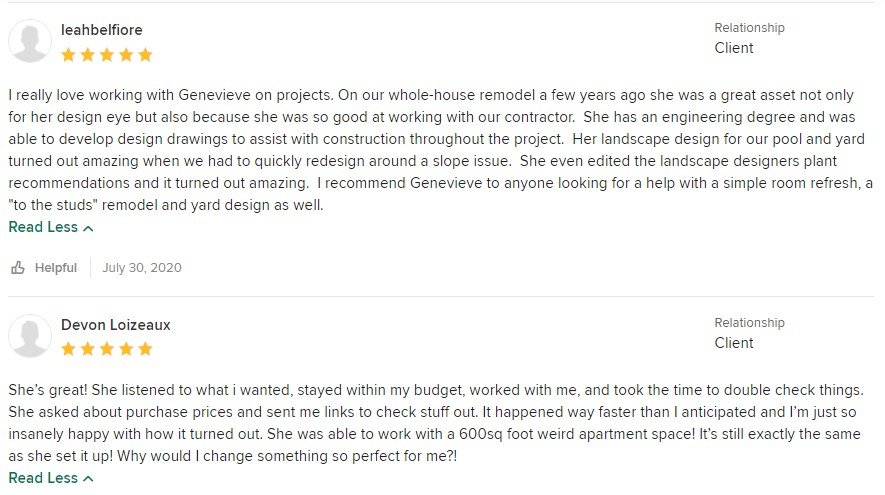
Put your Orange County interior designer’s experience to the test! Remember, it is OK to ask your interior designer where they studied design, or how they got their technical training. It is also recommended that you look at pedigree, past reviews, and previous projects, as well as speak with some of their previous clients. While pictures give you an idea of the final product, they don’t show your designer executing the interior design process itself. However, previous clients can provide you with insight into what it is like working with a specific designer! At Viève Interiors, clients and contractors love that we make the process of design easy.
3. How Does the Interior Designer Charge for Services?
It’s not just important to discuss how much a designer may charge, but how they charge as well! Some interior design companies may charge an hourly rate, while others charge a flat fee. If you want a high level of involvement every step of the way, then you may want a flat rate for full-service design, while someone who just needs to replace an item or two or even just a few hours of design consulting might do best with an hourly fee. At Viève Interiors, we offer either flat-fee or hourly design services to accommodate your needs no matter how big or small your project may be.
Payment schedule is also an important thing to consider when looking at your budget. Whether your Orange County designer invoices on a monthly basis, requires an upfront retainer or regular installments, make sure to find what works for you and your plans.
4. How Long Will Your Interior Design Project Take?
Of course, if you could hire the Mary Poppins of interior design in Orange County, and everything would be new at the snap of a finger, we would hire her too!. Unfortunately, the design process doesn’t work that way. The reality is that full home renovations take many months, even a year or more to complete. And, since the COVID pandemic, we are still seeing major delays in the shipment and delivery of materials and merchandise needed to complete your designs.
Make sure to be realistic about the timeline of your project and ask your designer how long it might take. Also keep in mind, everything doesn’t have to be done at once. In fact, many homeowners break their project into phases or by room. If your timeline or budget is limited, consider focusing on the key areas of your home first. Whichever way you decide to go—room-by-room or full remodel—choose an interior designer that will be forthcoming about the timeline.
5. Does Your Interior Designer Have Relationships with Contractors in OC?
An interior designer can’t be successful without great, long-term, relationships with local contractors in Orange County. While the interior designer might be steering the ship, contractors are the engine that get the project to where it needs to go.
A good contractor is worth their weight in gold, and a great interior designer has a solid rolodex of good contractors. After all, what good is the design if it never makes it off paper?

We hope that you have gained a better understanding of what to look for when hiring an interior designer in Orange County! If you have questions, or would like to book a discovery call, call 949-610-7800 or fill out the contact form and we will reach out to you directly!
At Viève Interiors, it is our mission to help homeowners love where they live because happy homes are the most beautiful homes!

Understanding the Interior Design Process: a Step-by-Step Guide for Working with an Interior Designer
Curious about the interior design process? Check out our step-by-step guide for working with an interior designer. You’ll gain a better understanding of the full remodel process, from discovery call to final walkthrough and everything in between.
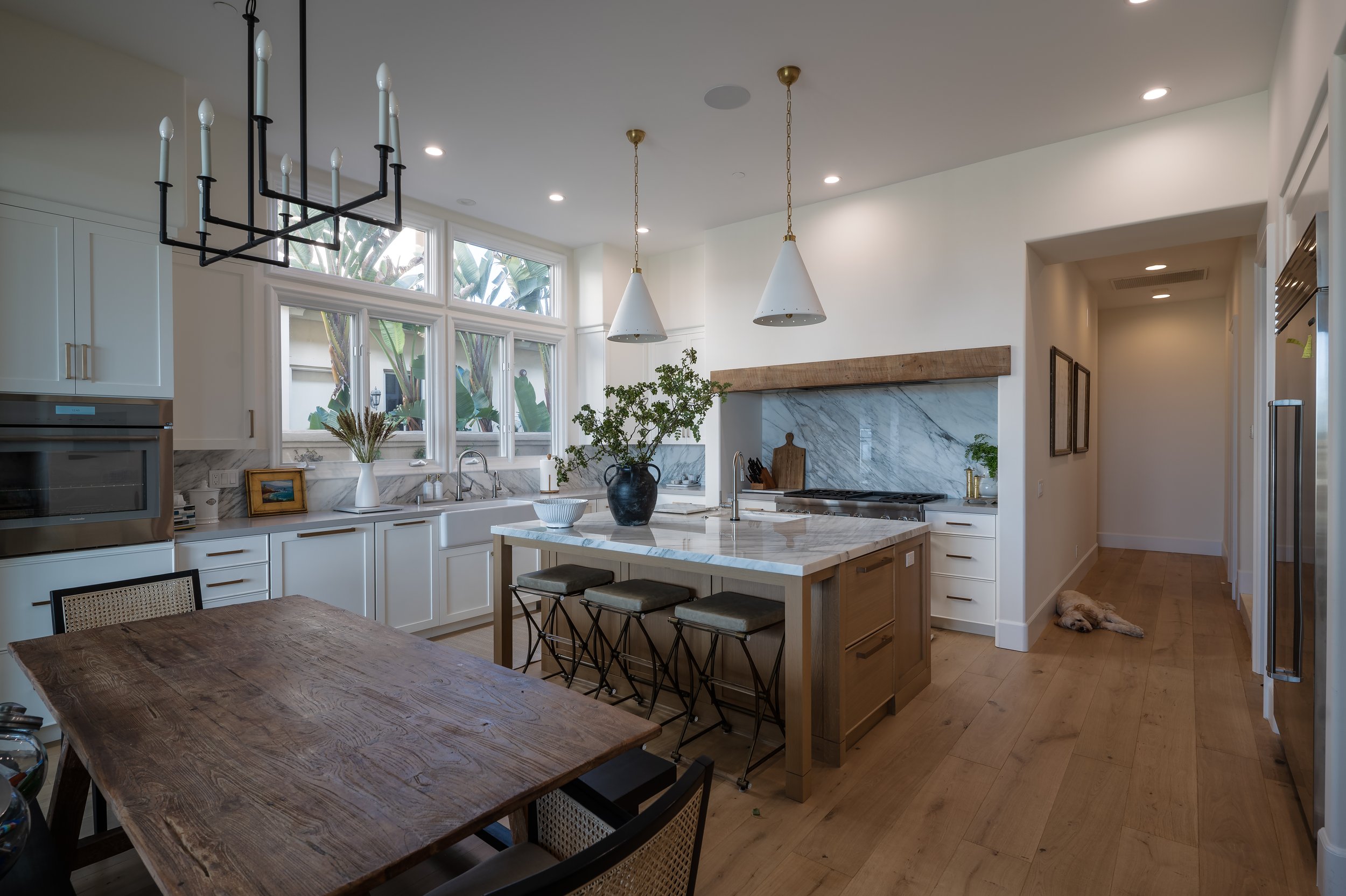
Designed by Vieve Interiors
I know what I like, but I just don’t know how to make it all come together. We hear this so often from our clients. This means it’s time—time to tap out (so to speak) and tap in a qualified interior designer! Working with an interior designer eliminates the stress and overwhelm, eases the process of remodeling and building homes, improves the functionality of your living space, and transforms your personal style and goals into a beautiful, cohesive home.
If this is your first time working with an interior designer, you may be curious about the process. You’re in the right place. We’ve created a step-by-step guide for working with an interior designer to help you develop a good understanding of the interior design process before you begin.
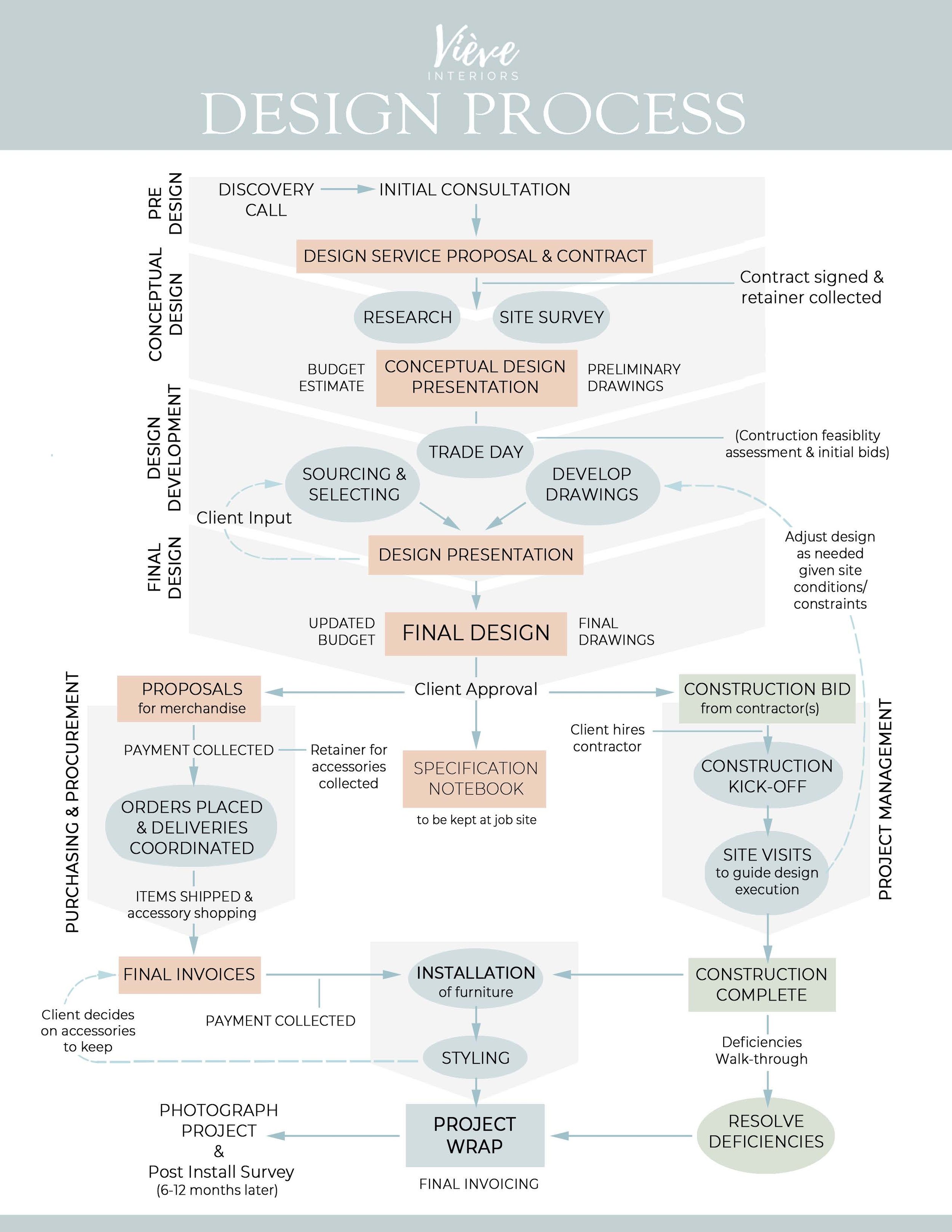
Step One: The Discovery Phone Call
The first step in the interior design process is to get to know your potential interior designer with a discovery call. This initial meet-and-greet is the perfect opportunity for both you and the interior designer to determine if working together is a good fit.
Your choice of interior designer shouldn’t be based solely on design style. While good style is obviously a determining factor, it is important to remember that if design principles like balance, rhythm and repetition, contrast, and proportion, are well thought out, your space will come together in a cohesive way no matter what design style you choose. So, find someone who:
Will work within your timeline and budget.
Is a good listener and will not steamroll your ideas—a good designer should be able to easily add your personality into their design plans.
Can decipher your pain points and goals.
Not only has an eye for aesthetics, but also has a technical background and plenty of experience.
Once you are confident you have found a perfect match for your redesign, it’s time to schedule your in-person, on-site consultation.
Step Two: In-Person, On-Site Consultation
The in-person, on-site consultation kicks off the start of your project (yay!). Each design firm does things a little differently, but our initial consultation typically lasts two hours and is a paid service. During your consultation, you will start to have conversations about functionality and style. This is your time to tell your designer all your hopes and dreams for your space! Your designer may make some suggestions or have some design ideas to consider, but this meeting is largely about gathering as much information as possible to understand your needs. This is also when your designer will go over the entire design process and your contract.
Step Three: The Conceptual Design Phase
Time to get excited—during the conceptual design phase, your designer is hard at work putting together their big vision for your home! The designer will complete a site survey to take measurements and photos of your space. You are also likely to receive access to a shared Pinterest board during this phase so that you and your designer can start to get inspired.
This phase is also the time when initial floor planning begins—to develop good flow patterns and add desired features into your home. If you opted to work with a designer who also has a technical background, you will likely see preliminary AutoCAD drawings of initial floor plans for full remodels and some options for furniture space plans.
At the end of this phase, your designer will meet with you to review the initial plans, conceptual design ideas, and an estimated budget to ensure they are on track with the design intent.
Step Four: The Design Development Phase
After the initial plans are approved, the design development phase begins. This phase is kicked off with a “trade day” in which your interior designer will review the preliminary design ideas with the contractor and tradesmen to get initial bids for construction.
Next, your interior design team will develop all drawings and iron out all the specifics (every little detail) while simultaneously sourcing all materials, fixtures and furnishings. They will carefully select everything for your newly renovated home, including:
Tile
Lighting
Finishes
Countertops
Cabinetry
Paint colors
Flooring
Plumbing
Appliances
Furniture
Ready-made or custom pieces
You get the idea! Once the refined plans for your design are complete and selections are made, your designer will request pricing from vendors and update the budget as well as the timeline.
At the end of this phase, you will meet with your interior designer to review a finalized design presentation, tear sheets, and the physical material samples. This design plan will be the most finished product up to this point. If something is not approved, the designer will reselect items, refine any construction drawings, and present you with the updated design. Once everything is approved, we move onto the final design phase.
Step Five: The Final Design Phase
In the final design phase, a few big things are happening. First, your interior designer will create a specifications notebook for the general contractor (to be left at the job site) that includes all floor plans, along with specification sheets of finishes, fixtures and furnishings. All final drawings will be given to you, the general contractor, and any trades necessary. If the general contractor has not done so yet, this is the time they will obtain any required permits.
Additionally, your designer should begin collecting accessories to be able to complete your design once construction is finished. At Viève Interiors, we compile a list of accessories and final touches needed and then collect a retainer before purchasing what we need to style out your home. Once that is done, “purchasing and procurement” of all merchandise will begin. The interior design team will coordinate all deliveries and, when necessary, work with a receiver who will make sure everything is in great condition.
The final design phase will also include a lot of project management tasks. For example, the interior designer should host a walk-through meeting with the contractor to kick off construction, and then make periodic visits to the site to ensure design execution is going as planned. Inevitably, issues may arise, in which case your designer should always be looking for solutions and adjusting plans and drawings when needed.
During this final design phase, the designer will also verify locations of light fixtures, tiles and other flooring, refine details on site, and coordinate additional vendors (like an upholster, wallpaper installer, or window treatment workroom).
Step Six: Installation and Styling
Finally, the stage when we get to see it all come together! Once construction is complete, your interior design team will schedule a time to take photographs and will install all furniture and décor. At this point, you get to decide what accessories you want to keep and what you want to return. It’s so fun!
Step Seven: Project Wrap
After a long journey, the day has finally come for the last walk through—yay! To make sure that you are totally and completely in love with your new home design, your interior designer will walk through your space with you and note any deficiencies that need to be resolved, while coordinating solutions. This is also the time where your designer will take pictures of your beautiful home and give you the final invoice. If you are happy with your new remodel, it’s the perfect opportunity to give your interior designer a few referrals or a raving review!
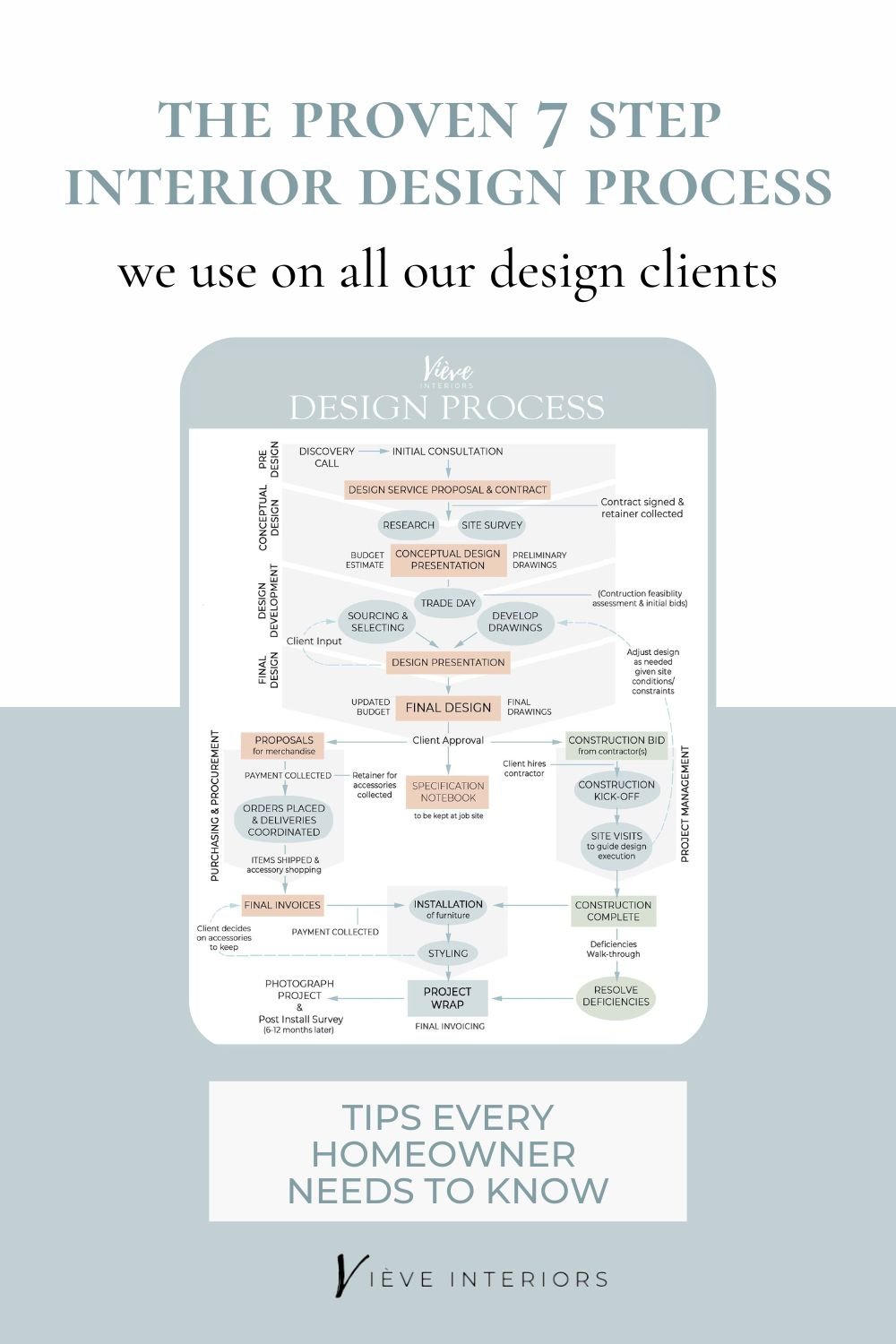
Want to save this blog post for later? Be sure to save this to your Pinterest Interior Design Tips Board!
We hope that you have gained a better understanding of the interior design process! If you have questions, or would like to book a discovery call, call 949-610-7800 or fill out the contact form and we will reach out to you directly!
At Viève Interiors, it is our mission to help homeowners love where they live because happy homes are the most beautiful homes!

Hi friends! I’m Genevieve, ower of Viève Interiors. With an attentive ear, savvy technical skills, and a knack for style, I love helping clients create beautiful, polished and personalized homes that they love. For more information about how we can help you design your dream home, reach out to set up a complimentary discovery call.